Two-way (bidirectional) chargers
The piece of hardware that turns an electric truck into a home battery.
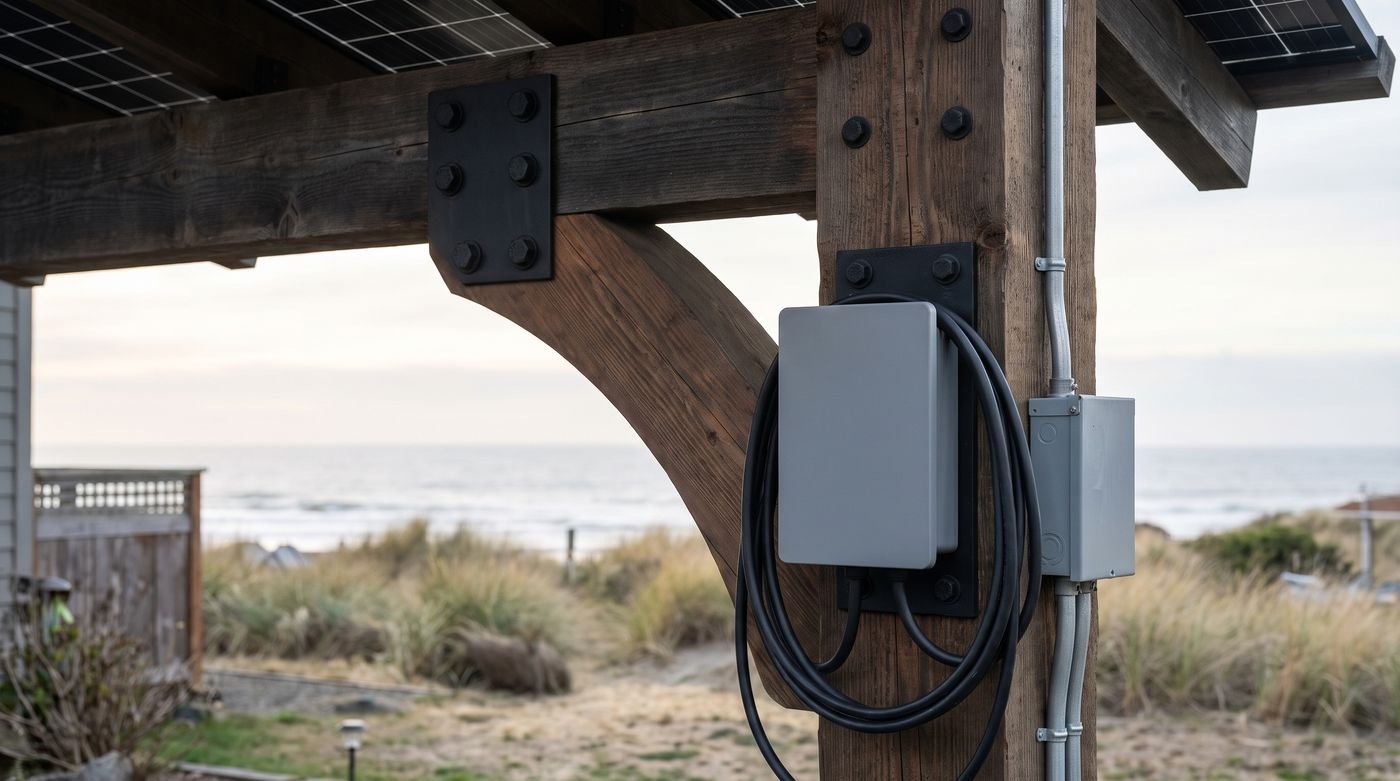
One-way vs. two-way
A normal EV charger moves power one direction: from your house into the vehicle. A bidirectional charger moves it both ways. In an outage, it pulls power out of the vehicle's battery and feeds your home.
The terms you'll hear
- V2H (vehicle-to-home): the vehicle powers your house. This is what Bugging Out Solar is about.
- V2L (vehicle-to-load): outlets on the vehicle itself, for tools, a fridge or a coffee maker.
- V2G (vehicle-to-grid): the vehicle sends power back to the utility. Rare at home today.
The transfer switch matters
Before your vehicle can run the house, the house has to be cut off from the power lines. A transfer switch does that. It keeps your truck from back-feeding the grid, which protects line crews, and it's what makes a vehicle-to-home setup safe and code-compliant. A licensed electrician installs it.
Example: Ford's setup
Ford's home backup for the F-150 Lightning uses the 80-amp Ford Charge Station Pro plus a Home Integration System, which includes an inverter, a transfer switch and a small battery that starts the system up when the grid is dark. Ford rates it at up to 9.6 kW to the house.
What to plan for
- Use the charger your vehicle's maker approves for two-way power.
- Expect panel work and a permit.
- Decide what the house runs during an outage — whole home or essentials — since that sets how long your battery lasts.
- Pair it with solar built for backup, so the vehicle refills itself while the grid is down.
Ready when the lights go out
Tell us about your place and what you drive. We'll tell you straight what a Bugging Out carport would do for you.