
Power your house with your truck
Vehicle-to-home, explained in plain words: what it is, how long it lasts and what it takes.
What vehicle-to-home means
Vehicle-to-home means your electric vehicle sends power into your house, usually during an outage. The vehicle's battery takes the place of the grid until the power comes back.
How long will it run my house?
The U.S. Energy Information Administration puts the average home at 865 kWh a month in 2024, or about 29 kWh a day. A full-size electric truck or SUV battery holds about 100 kWh or more.
- Normal living: about 3 days.
- Essentials only (fridge, freezer, lights, fans, well pump, internet): about a week or more.
- With a solar carport: sunny days add roughly 30 kWh back, which can cover an essentials-only day on its own.
Ford's own numbers for the extended-range F-150 Lightning line up with this: about three days at 30 kWh a day, up to about ten with rationing or solar.
What it takes
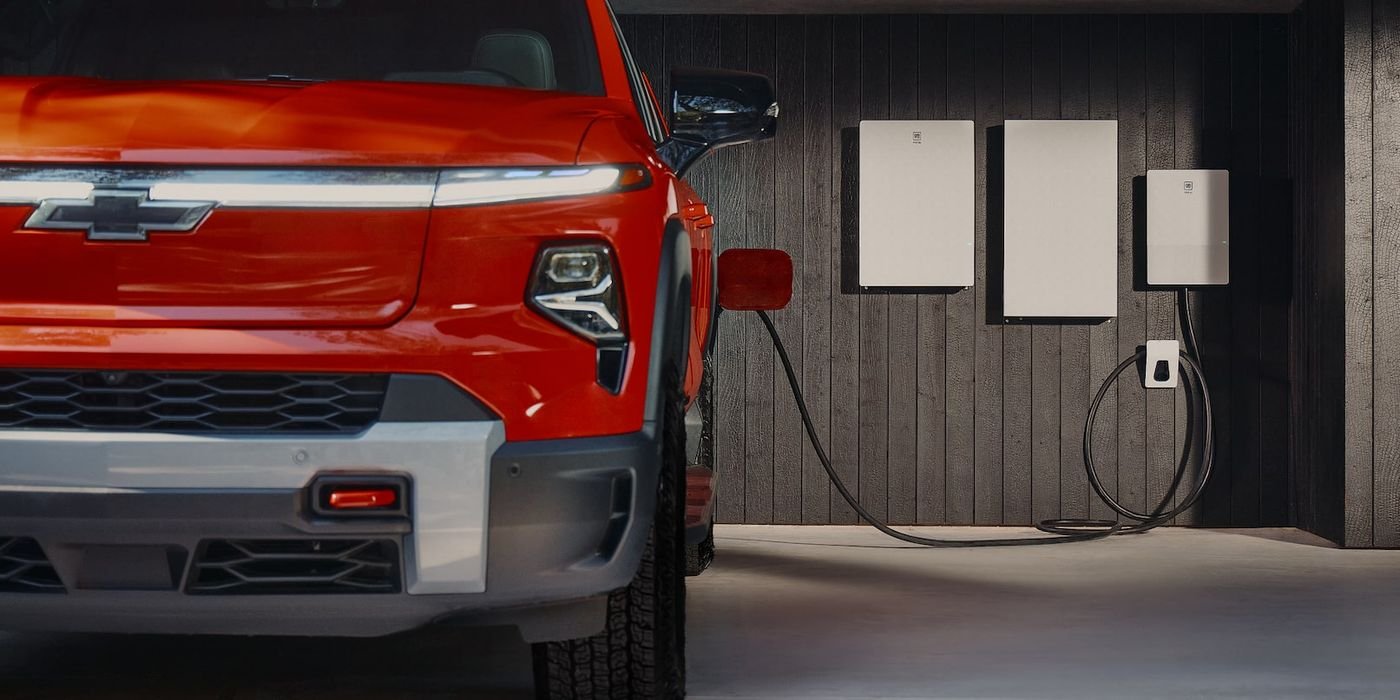
- A vehicle that supports two-way power. See which ones →
- A two-way charger, also called a bidirectional charger. How they work →
- A transfer switch that separates your house from the grid before the vehicle feeds it.
- An electrician and a permit. This is panel-level work, not a plug-in gadget.
Why add the solar carport?
Without solar, your backup is a countdown: the battery drains and you're done. With a solar roof built for backup, the sun refills the vehicle every day the grid is out. And on all the ordinary days, it charges your driving for free.
Ready when the lights go out
Tell us about your place and what you drive. We'll tell you straight what a Bugging Out carport would do for you.