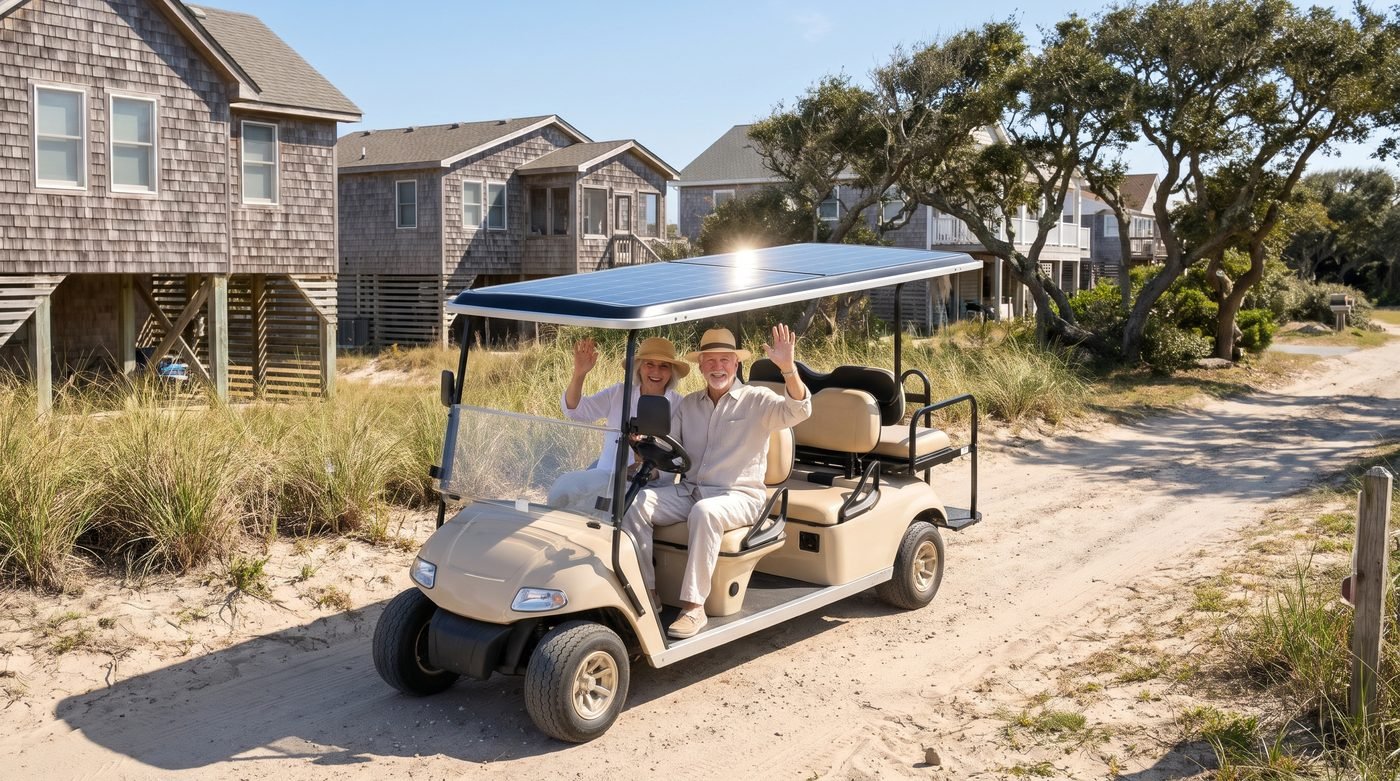
Solar Buggies
The golf cart that charges in the sun and keeps your house running when the power goes out.
Ride it. Charge it in the sun. Run the house with it.
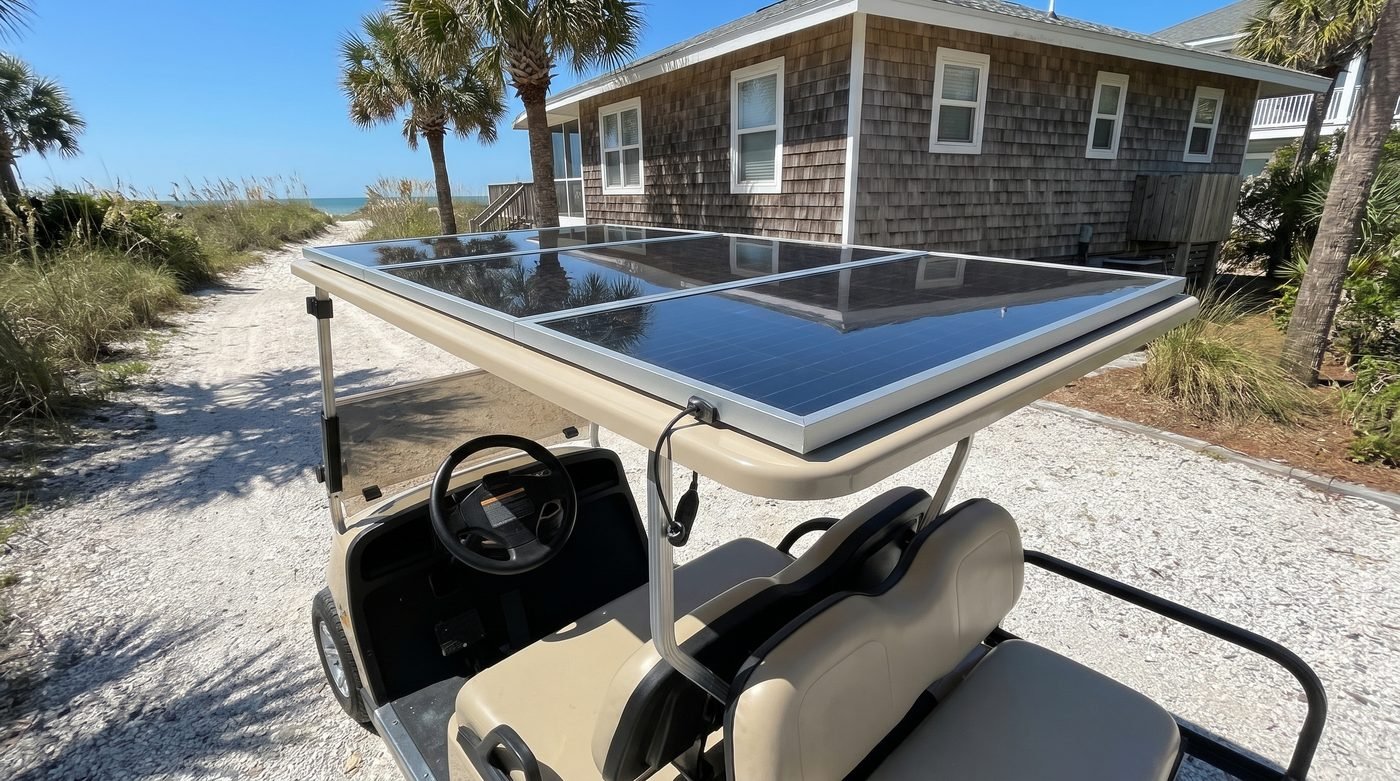
Charges from the sun
A solar roof tops up the battery wherever you park it: the driveway, the beach access, the grocery store lot. Fewer evenings tied to the charger.
Backs up the house
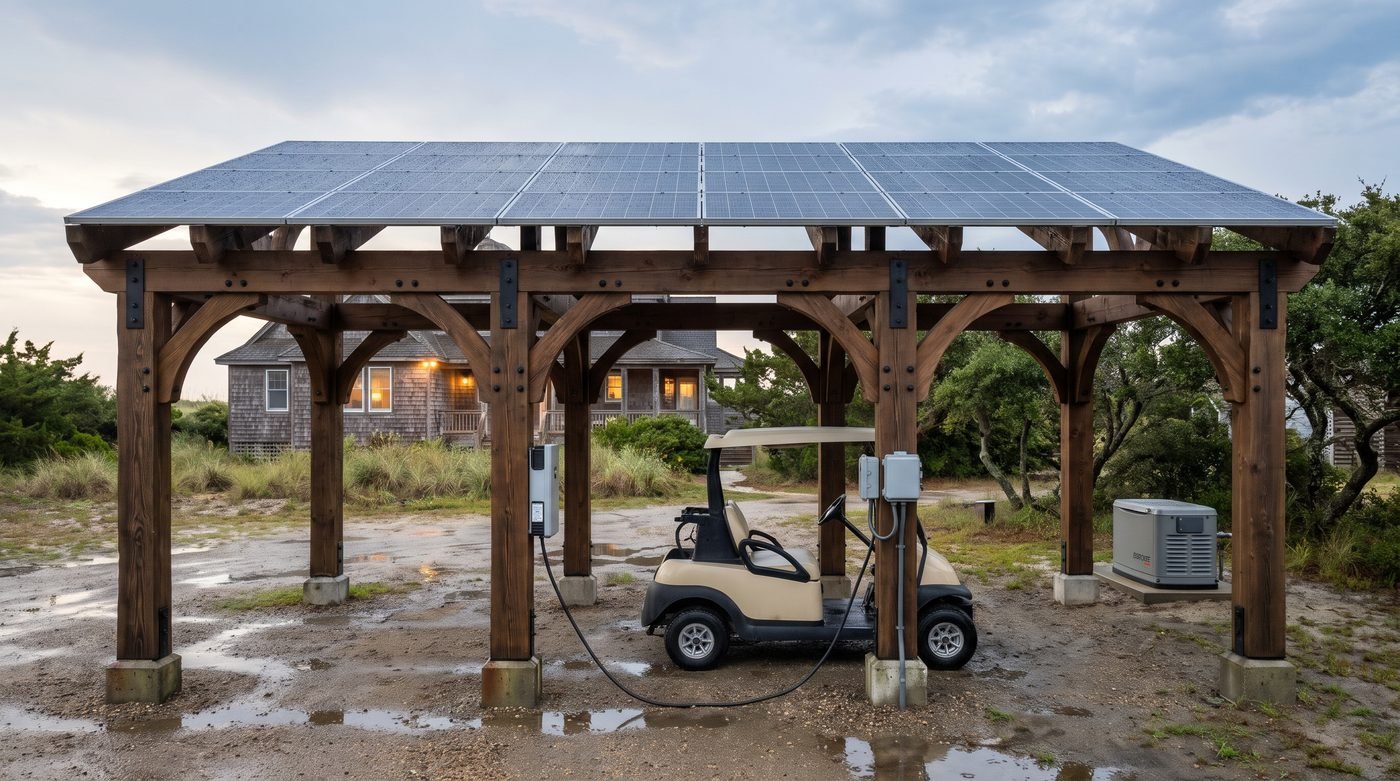
Park it, plug it in at the post, and the cart battery runs the fridge, lights, Wi-Fi and fans through a storm outage.
Rides like a buggy
Quiet, comfortable and easy to get in and out of. Shade overhead, and the breeze does the rest.
An ordinary day
You ride to breakfast, the beach and the store. While the cart sits in the sun, the roof puts charge back in. At home, it parks under the carport and plugs in like it always has.
A storm day
The power drops. You plug the cart in at the post and flip the transfer switch. The fridge stays cold, the lights and Wi-Fi stay on, and the fans keep running, with no noise and no fumes.
Add the generator option, and when the cart runs low, the generator runs about two hours to power the house and refill the cart, then shuts off. When the sun comes back, the roof and the solar carport take over the refilling.
Start with the roof. Add the rest when you're ready.
Solar Roof
A 200 to 400 watt solar roof for your cart, with the charge controller and wiring. Fits most carts with a standard roof frame.
For: anyone who wants fewer trips to the charger.
Backup Power
The house side: a 48-volt inverter/charger, a plug-in point at the carport post, and a transfer switch for your essentials. Installed with a licensed electrician.
For: riding out outages on the cart battery.
Generator option
A generator wired into the inverter's generator input. It refills the cart in about two hours instead of running all day.
For: long outages and cloudy stretches.
The Complete Solar Buggy
The cart, the solar roof and the backup hookup together, set up and ready to go. Add a solar carport to shade it and refill it at home.
For: the beach house, done right.
Built to order and priced by quote, because carts, batteries and houses differ. We're now taking names for the first builds.
The numbers
| Typical | |
|---|---|
| Solar roof size | 200 to 400 watts |
| Sun charge, clear day | About 0.7 to 1.4 kWh |
| Miles from the sun, clear day | About 3 to 9 miles |
| Cart battery (48-volt lithium) | About 5 kWh, some larger |
| House essentials on one battery | About a day |
| Generator refill | About 2 hours |
Estimates. Real results depend on the cart, the battery, the weather and what you plug in.
Who it's for
- Beach-house owners who want the fridge cold and the lights on after a storm.
- Retirees and anyone who wants an easy ride: quiet, shaded and simple to get in and out of.
- Golf cart rental fleets that want carts topped up between renters.
- Anyone done depending on the utility, the gas station and the oil market for every mile and every light. Self-reliance →
Tell us about your cart
What you drive now (or want), where you live, and what you'd want running in an outage. We'll come back with what a Solar Buggy setup would look like for you.
We answer every message ourselves.
Solar Buggies questions
Will the solar roof fully charge the cart?
On most days it tops it up rather than filling it from empty. A 200 to 400 watt roof adds roughly 0.7 to 1.4 kWh on a sunny day, which is about 3 to 9 miles of driving. For short trips around town, that can cover most of what you drive.
Can you put a solar roof on the cart I already have?
Usually, yes. Most carts with a standard roof frame can take a solar roof. Tell us the make, model and year, and whether the battery is lithium or lead-acid.
What does the cart need to work as backup power?
A 48-volt lithium battery works best. The house side needs an inverter/charger, a plug-in point at the carport post and a transfer switch, installed by a licensed electrician.
How much of the house will it run?
The essentials: the fridge, lights, Wi-Fi, fans and phone chargers, for about a day on a typical 5 kWh cart battery. Not central air, an electric water heater, a dryer or a range. See golf cart backup power for the numbers.
Does a generator have to be part of it?
No. The generator is an option. With one, it runs about two hours to refill the cart and then shuts off, instead of running all day.
Does a solar roof make a cart street legal?
No. A solar roof doesn't change whether a cart is street legal. Local rules for golf carts and low-speed vehicles still apply.
Do you work with rental fleets?
Yes. A solar roof keeps rental carts topped up while they sit between renters, which means less time on the charger. Ask us about fleet builds.