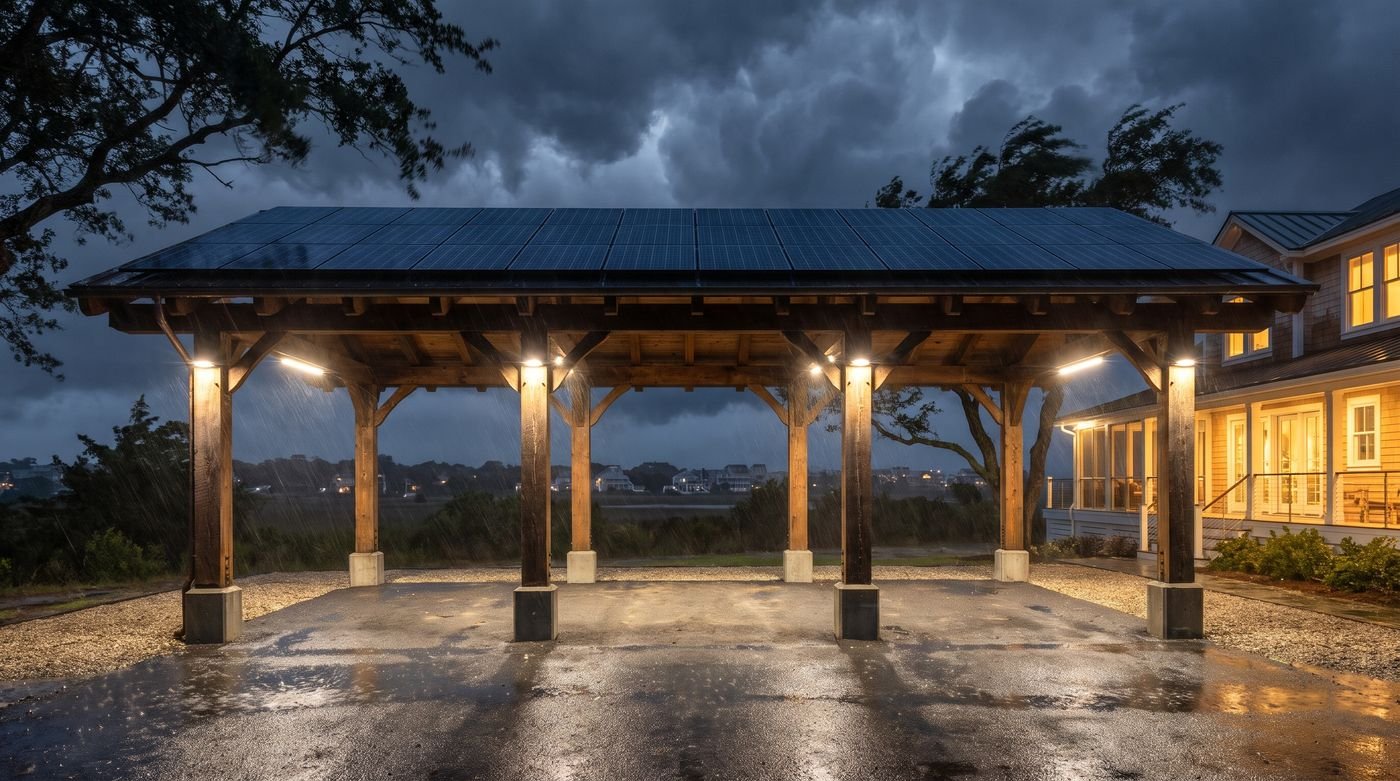
Before the Storm: things worth knowing before the lights go out
Short, sourced pieces on getting through an outage. Most of it is simple, and most people haven’t thought about it yet.
Start here
Backup power, one step at a time: from free to a solar carport
Six steps. Each one stands on its own, and each one makes the next one smaller.
Hold a dress rehearsal: run your house on backup power for one calm afternoon
A nine-step checklist for a calm day, so you are not working it out by flashlight.
What you only find out the first night
Eleven small surprises that are not in the brochure: the blank thermostat, the furnace drain pump, the gas oven that needs power.
Winter
Your gas furnace won’t run in a power outage. It takes very little to fix that.
The fan needs roughly 300 to 875 watts. An electric heat strip needs about 10,000.
Warm the person, not the room
A 100-watt blanket uses 0.8 kilowatt-hours a night. A 1,500-watt space heater uses 12.
Already own a portable generator? Pair it with a solar generator.
While the generator runs the house, its spare power fills a battery that can run a gas furnace fan for about four hours.
One warm room beats a cold house
If the furnace is down, stop heating the house. Heat one room, and mostly heat the people in it.
Hurricane season
Your generator’s weak point isn’t watts. It’s gallons.
A small generator makes about 58% more electricity per gallon running hard into a battery than idling all day.
The biggest backup battery you own may be parked in the driveway
Ford says one hybrid pickup can carry a house for up to five days.
The storm didn’t cut your water. The power did.
On a well, no power means no water. Where the water in your house already is, starting with the water heater.
After a summer storm: one cool room
Central air is out of reach for a small generator. One window unit and a few fans are not.
Any season
A power outage can be the best weekend of the year
It is like getting snowed in at a cabin, if the house stays warm and the refrigerator stays cold.
What plugs into the battery, and what plugs into the generator
Small steady things on the battery. Things that need a hard kick on the generator. How the cords go.
Most people buy more generator than they need. A comparison guide.
The essentials run on about 1,000 watts. Four sizes compared by fuel, noise and weight.
The cheapest backup battery is a case of water bottles
A full freezer holds its cold about 48 hours, a half-full one about 24.
The average home lost power for 11 hours in 2024. The average hides the real story.
Three hurricanes accounted for 80% of it. Plan for day three, not for the average.
Use less, and the battery you have gets bigger
The quiet drains worth switching off, and how to make heat once and store it.
Make the battery last when nobody knows how long
What to switch off first, second and third, and how to find out what a night costs in your house.
Treat the refrigerator like an ice chest
The FDA gives a closed refrigerator about 4 hours and a full freezer about 48. The door is the whole game.
Phones and internet for a week, and what the car is good for
The phone was never the problem. The tower is. And the car is a poor generator but a fine phone charger.
For reporters
Storm week fact sheet: the numbers, with sources
One page of sourced numbers for storm coverage, including North Carolina and Virginia. Free to quote.
Every piece here lists its numbers and where they came from. Use the numbers and quote the pieces freely. All we ask is a link back to the page you used. To reach us, use the form at Talk to Us.
Ready when the lights go out
Tell us about your place and what you drive, or plan to. We'll tell you straight what a Bugging Out pool house or carport would do for you.